
Available courses

Introduction

This course provides tools and guidelines for Integrating a Citizen Science Approach Into Higher Education Curricula. By providing (links to )readily available materials, offering course structure suggestions, and highlighting key issues to address, the content aims to provide educators with practical resources for developing a course on citizen science. 

Structure

Designed to be a Citizen Science Information Package, this course is structured into the following sections:

-Citizen Science Basics

This section offers resources for an introduction and basic familiarisation with Citizen Science. These resources are available in multiple formats, e.g. powerpoint slides, articles , video clips and infographics addressing what CS is, benefits of using a CS approach, the Ten Principles of Citizen Science as published by the European Citizen Science Association

-Citizen Science  Research in Education

This section discusses the benefits and challenges of incorporating Citizen Science in University Curricula. There are also example of existing citizen science course at tertiary level  

-Citizen Science Toolkit
A digital guide towards creating a Citizen science course utilising guidelines from the decision tree as well as resources on citizen science project strategy and design. The Toolkit also contains White papers and citizen science LMS packages

-FOSS for CS
This sections offers suggestions on (Free Open Source) software that can be used in designing and implementing citizen science projects including SemFlow. 


Who is this for:
The information package is created for educators considering incorporating citizen science in their curricula but it can be used by anyone interested in citizen science

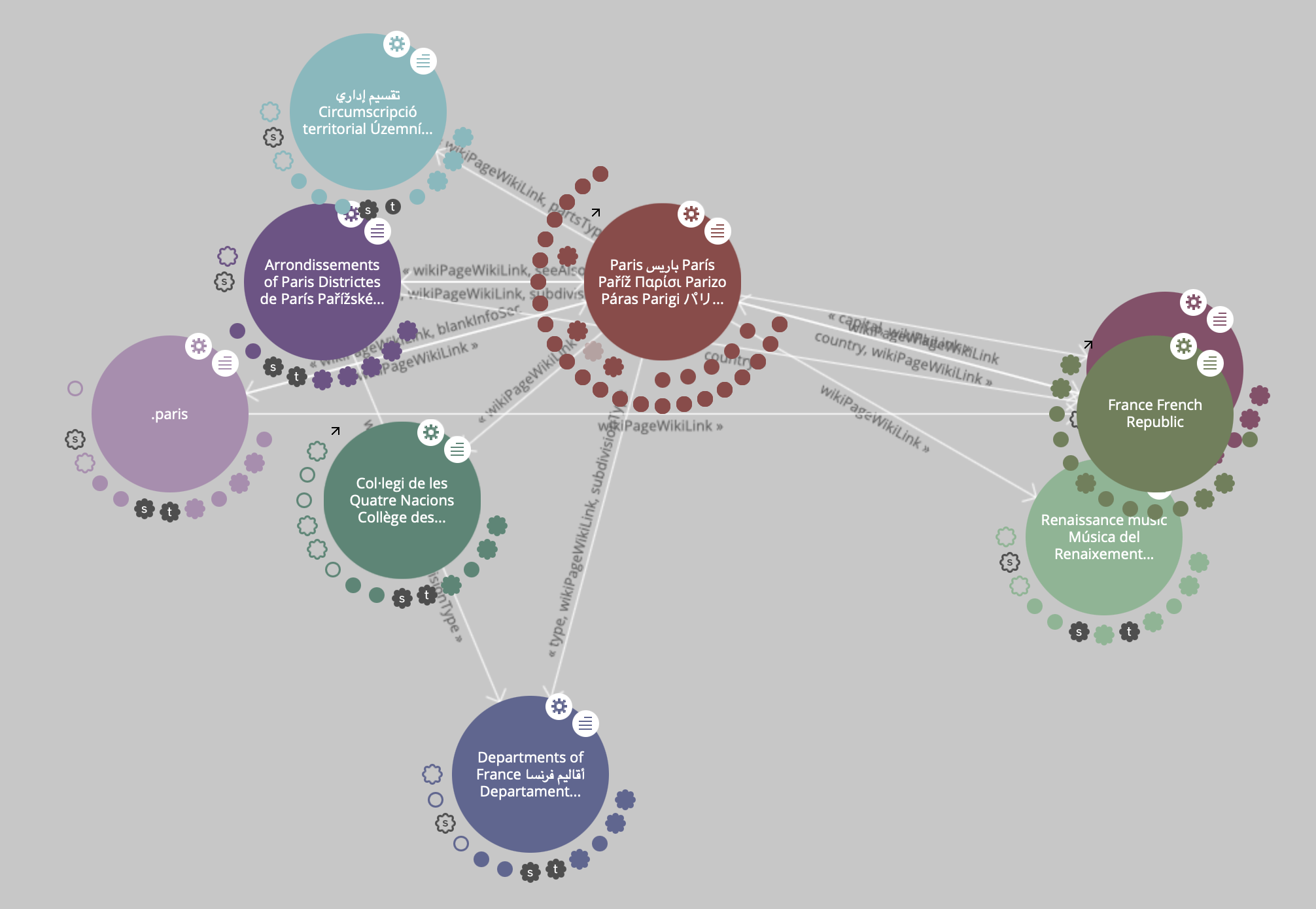







Data-driven discovery, interdisciplinary collaboration, and digital twins are transforming research and practice. The ability to semantically organize, integrate, and consume metadata of Digital Twin Objects (DTOs) is a critical skill for researchers, academics, and professionals.

The overall learning goal of this course is to develop the skills and understanding necessary to enhance the (meta)data of DTO datasets for downstream enrichment, such as advanced analytics, inter-linkage, and consumption through semantically-enabled tools and services provided by SemFlow.The semantic uplift of DTO metadata will unlock new downstream functionalities, enabling users to explore and discover datasets via a faceted, semantic search interface that guides compliance with any metadata standard, including INSPIRE.

This course leverages SemFlow (SemanticFlow Knowledge Hub) and its companion browser extension, SemLinked, to guide participants through principles and practices of building, managing, and consuming an online Body of Knowledge (BoK) tailored to DTO metadata enrichment. Through a blend of conceptual foundations, hands-on tool demonstrations, and real-world case studies, learners will gain practical experience in generating domain-specific corpora, defining and mapping concepts using ontological approaches, and creating interconnected knowledge graphs. Advanced topics include fine-tuning language models with BoK-derived corpora, integrating semantic models into data-processing workflows for DTO analytics, and developing downstream semantic services that expose enriched metadata for discovery and interoperability.

The course is intended for: 
Researchers and Academics: Seeking to organize and interlink literature, methodologies, and datasets across emerging or interdisciplinary fields.
Professionals and Practitioners: Engaged in domains where data integration, knowledge management, or policy impact analysis is critical (e.g., environmental sciences, maritime management, digital humanities, health informatics).
Knowledge Engineers and Data Scientists: Interested in ontologies, knowledge graphs, semantic web technologies, and applying Large Language Models (LLMs) for corpus-driven model fine-tuning.
Technology Leads and Project Managers: Responsible for guiding teams toward interoperable data architectures, semantic standards compliance, and efficient knowledge reuse.


Keywords: knowledge management, visual “mind-mapping canvas”, NLP, LLM, interoperability-by-design, cross-domain, Marine Management and Innovation

Author(s): V. Venus, F. Wahyudi, P. Muchada, F. Kurniawan
Affiliation: RAMANI, ILIAD-project


In this course we offer a dedicated training programme that deepens the various aspects of a successful business idea. In essence, the programme educates start-ups to develop an insight-based & validated Business plan. The programme aims to:

  • generate impactful start-ups and accelerate their market entry;
  • help existing starters to grow faster.

It is part of our mission to support supports start-ups which use space technologies by offering access to an international network, tools, knowledge, and finance.

What will you learn?

EMBRACE YOUR PROBLEM – Understanding your proposition thoroughly, how it delivers the best possible solution for the user and their problem.

CREATE ADDED VALUE – Designing a value proposition which nails the customer problem, validate it and make sure it is easy to understand. Make sure your solution is scalable, unique and fits your target markets.

VALIDATE AND PLAN – Before starting to build you have to validate the concept of your solution with your customers. As a start-up, by definition you’re making many assumptions and you need to validate these as early as possible to avoid spending time and money on building something nobody wants to pay for.

Why you should join?

  • A chance to validate your business idea;
  • Small-sized groups;
  • Coaching focused on your specific needs;
  • Prepare for an incubation program.

Who can apply?

  • Entrepreneurial teams of 2-4 persons;
  • Company not older than 3 years;
  • Business idea based on space technologies (including EO or GNSS);
  • Your aim is to impact the BoP (Bottom-of-pyramid) through inclusive business

Timeline

The programme will be run in accordance with the following indicative timeline.
We reserve the right to change any of the timeframes indicated on our programme website:

  • Session 1 – Assess proposition

  • Session 2 – Users

  • Session 3 – Tech/Eco opportunities

  • Session 4 – Functionalities & tech. architecture

  • Session 5 – Use & Bizz case

  • Session 6 – Concept Validation

  • Session 7 – Tech & Market PoC, Project Plan

  • Session 8 – Startup Branding

    *Approved participants receive an invoice for registration fee of € 1.500,- (ex VAT) per team of 2 founders. Any additional team members pay only € 400,-. This covers the costs of technical tools (APIs), trainers, workshop materials, etc.

The workshops will take place between .

General conditions

When accepting your spot in the programme, you agree to the following general terms and conditions:
Compulsory attendance and active participation in all workshops (at least one person per team).
Compulsory and active participation in the deliverables and “homework” (at least one person per team).

Intellectual property rights
a. You confirm by entering the programme that, to the best of your knowledge, you own all Intellectual Property Rights (“IPRs”) subsisting in your entry to the programme and that your entry does not infringe any third party’s IPRs. You are responsible for obtaining any necessary permission from third parties to use their IPRs in your submission. We reserve the right to disclose your identity to any third party claiming material posted or uploaded by you to the programme website constitutes a violation of their IPRs, or their confidentiality/privacy rights. We reserve the right to ask for additional evidence or documents to validate that all information you supply is true and complete.

b. Subject to the terms of clause a, we recognize your ownership of the IPRs subsisting in your entry to the programme.

Changes and programme cancellation
a. We may cancel the programme or vary these general terms and conditions at any time at our discretion. We will post any changes to these general terms and conditions on the website.
b. We reserve the right to suspend the programme at any time and to change the form and substance, dates for deadlines and events, locations or specification of the programme.

Personal Data
a. Unless stated otherwise, information (including personal information) submitted in any entry will be used by Ujuizi Laboratories International
b. By submitting your entry to the programme, you give us permission to use the information provided by you in your entry and during your participation in the programme (including your personal details, logos and photos uploaded by you and taken during events) for the purposes of administering and judging the programme, for any purpose connected to the programme and for promotional purposes. We may share this information with anyone who is involved in the programme.


The Semantic Web primer - representing semantically structured knowledge on the World Wide Web

Through the academy Ramani attempts to educate developers on the Semantic Web. In order to make use of Linked Data it is important to understand the graph structure of the data and understand how this data is created. However, in order to consume the data and use it to more easily create applications basic knowledge should be sufficient. Therefore this course aims to be practice intensive rather than focusing on the theory. The aim is:

  • Make developers understand the added value of Web Semantics and Linked Data above traditional data models.
  • Provide a way of learning that is focused on useful examples for developers first and adding the necessary theory to recreate this after.

What you will learn:

  • Understanding the graph based structure of data on the Semantic Web
  • Understanding the data models that support Web Semantics
  • How to query data on the Semantic Web
  • How to consume data on the Semantic Web in a way that makes creating your application easier
  • How to create Linked Data or data models yourself in order to contribute to the Semantic Web

Course Topics:

  • Ontologies
    • This course will teach you why ontologies are needed on the Semantic Web, how they contribute to sharing knowledge, and how to build them yourselves
  • SPARQL
    • This course will help you understand the basics of querying data on the Semantic Web, introducing the query language SPARQL and tools to help you in  creating your own queries

Course summary

The objective of this course is to equip students with an interest in valorisation (e.g. geo-journalism) to deliver their scientific results as re-usable research objects for delivery through digital NEWSrooms, such that analysis can be repeated fully independently and best practices in journalism can be adhered to.

Stories about our Planet are broad by nature and it is the job of a journalist to help pin down the often interconnected reasons that drive environmental change. The growth of large, publicly accessible datasets presents the media community with new opportunities, but this also comes with the need for new skills to turn this trove of information into easy-to-understand, evidence-based stories. Simultaneously, ITC/UT has been teaching applied geo-information sciences for +60 years, but with increasing emphasis on academic skills in recent years. According to a recent survey, however, more than 80% of our alumni do not pursue an academic career. Therefore, an all-new MSc course module on geo-journalism is presented which teaches students to combine geodata, data analytics, and various Bodies of Knowledge (BoK) in creating compelling (cartographic) infographics to support their storytelling. Using this knowledge and skill, students are enabled to create compelling (cartographic) infographics in minutes rather than days. These infographics are fully semantically enriched, allowing others to see and question the data sources and underlying analyses. With each course assignment, students gradually populate their online NEWSroom with blog articles annotated by these (cartographic) infographics. As a portfolio of the student’s environmental storytelling efforts, this NEWSroom also helps improve their personal branding since their reporting is automatically indexed by Microsoft Bing and Google search because of the adherence to the Semantic Web-standards of our NEWSroom tooling.

The semantic tools and data models used in geo-journalism provide important ‘spill-overs’; the open-source technology stack not only facilitates fact-checking of claims made in news and blog articles, but also those in scientific journal articles. Studies show that only 10~30% of published science articles are reproducible. Many argue this is a logical result of the publishing format as in most papers textual reference is made such as “this experiment was conducted as previously reported [insert reference here]” instead of a live reference to the online executable algorithm and workflow to recreate the results. Our hope is that it will enable those with an enthusiasm for storytelling to use these rapid geo-information pipelines to support their valorization efforts in publishing (reviews) of scientific findings and how to stimulate viral spread across the Internet.

Learning outcomes

Upon completing this course the students are able to:

  1. Discover and tell a story that is appealing 

  2. Gain insights in journalistic best practices by publishing scientific results in the media

  3. Master tools for geo-journalism and online, rapid executable EO workflows

  4. Master robust, online peer-review workflow to stimulate viral spread across the Internet

  5. Valorize on research results by appraising and recommending suitable methods to summarize scientific findings for a broader audience using infographics and social media blog articles

  6. Understand practical ways to build-out your personal brand name by developing sound social media strategies


Contents


This course will prepare the students to become vocal individuals who have ability, attitudes, skills and know-how necessary for sound geo-journalism for the valorization of research results and uptake addressing the appropriate level of understanding for an audience. 

The course is structured as follows: (a) basic theory (frontal teaching) (b) flipped classroom teaching where the transfer of theoretical information from teacher to student (‘lecturing’) is taken out of the classroom/lectures and presented as material to study before the lecture. The lecture itself is then used to discuss important questions about the material, and assess the student’s level of understanding  (c) getting practical, including storytelling exercises (d) editorial meetings (e) develop a NEWSroom consisting of co-authored blogs and infographics, and, finally, a self-reflection report (f) where participants reflect on their learning curve and possible follow-ups are identified.

A. Basic theory 

The course starts with lectures (incl. guest lectures), followed by practical assignments. 

A.1 Lectures

A. Develop storytelling skills to repot about our Natural world:

  • Discover the story by identifying elements in scientific findings that contradict, agree, or deviate from popular opinion

  • How to write a news article in a 'foldable' manner

  • Business models for (semi) professional geo-journalism;

A.2. Guest lectures

A series of guest lectures will be organized from UTwente staff who have experience with:. 

  • How to write an enticing introductory section of a news story, aka "lede", that helps keep the reader’s attention

  • Understand design criteria for easy-to-understand visuals that support or tell your story

B. Advanced concepts: flipped classroom

Online materials are provided to the course participants to enhance their competencies in authoring and reviewing blog articles, accompanied by an appropriate (cartographic) infographic, related to a contemporary issue. The aim of this phase is to discover a students’ learning path and to prepare them for the role of author, editor, and publisher in a role-play (phase in C).


Master rapid, online executable EO workflows for geo-journalism and online publishing:

  • Appraise methods, tools, and data that help summarize these findings using an infographic

  • Elaborate data needs for the infographic

  • Subset geo-data by time, space, and parameter for the infographic

  • Propose rapid geo-data processing functions & reduce the data dimensionality meaningful for the infographic

  • Present and augment computer-generated infographics to be visually appealing and easy-to-understand


Master robust, online peer-review workflow to stimulate viral spread across the Internet:

  • Understand the basic principles of the Semantic Web 3.0 and the structured data types for "fact-checking"

  • Demonstrate an understanding of the full definition of ClaimReview (schema.org/ClaimReview)

  • Demonstrate authoring of a (review) claim (schema.org/CreativeWork)

  • Understand how truthfulness ratings are assigned using the reviewRating of the ClaimReview-process (schema.org/Rating)

  • Understand how the claim being checked by multiple reviewers can be summarized programmatically (based on this crowd of fact-checkers)


Appraise strategies and reasons to build a personal brand : 

  • Understand practical ways to build-out your online presence

  • Be able to tell a story orally, pitch your perspective on a contemporary environmental issue in less than 3 minutes 

  • Discriminate social media strategies

  • Understand (non)monatery business models for (semi) professional geo-journalism (e.g. freelance journalism, personal branding, or valorization of research results)


C. Getting practical; storytelling (oral and written) and roleplaying

In this phase you get to improve your geo-journalism skills by working on a story covering a real-life, contemporary environmental issue backed by geoinformation science. This requires that you use multiple theories and tools from geoinformation and journalism in an integrated fashion. Given the technical readiness of geo-journalism, several social-cultural aspects also deserve attention such as what are the (perceived) occupational or cultural barriers to be publicly outspoken. 

Four contemporary issues (study cases) are presented to students, whereby groups of students will jointly work on the design cycle of a story, frequently alternating the student’s role from author-editor-publisher-reader. Below an example design cycle:

  • Read up on promising fact-checking articles and discuss why some spread virally across the Internet

  • Compare the findings of 3 scientific articles (focus on the abstract & conclusions), are there elements that deviate from popular opinion (contradict, agree)?

  • Write an appropriate "lede" for the story you have in mind: hard-news ledes are generally used for breaking news and for more important, time-sensitive stories. Feature ledes are generally used on stories that are less deadline-oriented and for those that examine issues in a more in-depth way.

  • Write the main body of the blog post in a 'foldable' manner such that the reader can 'skip over' sub-paragraphs while still understanding the main point of the story

  • By hand, sketch a dummy infographic that would support the main elements of the story. 

  • Review the handwritten dummy infographic from one of your peers: does it support the main elements of the story?

  • Create the online-referenceable, reproducible EO workflow needed to create the infographic (based on the sketch). 

  • Etc.


The design cycle of a blog or a news article is an iterative process. This means that throughout the project you will improve each design step by going back and forth between steps until a satisfactory result is achieved, and checked by a potential reader or paying publisher. This means design iterations and rework are a natural part of this design cycle, all with the sole goal of improving the young geo-journalist. 


D. Editorial meetings 

Editorial meetings are foreseen to monitor and stimulate the progress of the students. The student groups will be presenting their progress in identifying and telling stories, addressing the challenges, and proposing possible solutions. The students will have the opportunity to comment on each other’s works and ask questions to the scientific and professional consultants. 


E. NEWSroom

As part of the students’ growing journalistic aspirations, with each course assignment students gradually populate their online NEWSroom with blog articles annotated by (cartographic) infographics as personal portfolio of their environmental storytelling efforts. This NEWSroom also helps to improve their personal branding since their reporting is automatically indexed by Microsoft Bing and Google search because of the ReviewClaim-tag, incl. their work in the various role-playing modes, e.g. as editor and reviewer, where fact-checking and feedback on the scientific rigor of underlying facts, incl. data, method, results and discussion, are presented in a scientific and clear manner. 


F. Self-reflection report 

A written self-reflection report (max 400 words) on the learning process within the context of the learning outcomes of the course and the contribution to the case studies supported with evidence

(individual & mark)


Teaching and learning approach

This course integrates blended learning with storytelling teaching approach. Blended learning combines face-to-face lectures with flipped classroom via online learning materials. Tutorials are self-learning online materials that stimulates learning by doing with some limited coaching. The students will work, hereafter, in multinational groups (consisting of 3-4 persons) on an article or story, combine and develop their skills in role-playing, and present in a “simulated” public hearing setup.


Allocated time per teaching and learning method (hours)


Assessment

The assessment will consist of 3 tests:

  • Test 1:  Practical storytelling assignment(s), need to finish (pass / fail)

  • Test 2: Theory 1 written test (and 1 resit); 30% of the final mark

  • Test 3: Write a Blog/news article and fact-check one (60% of the final mark):

  1. Blog; 40% of the final mark

  2. NEWSroom contents; 20% of the final mark

  • Test 4: self-reflection report 10% of the final mark


Best practices in Residential cleaning


For residential cleaning services, this training module teaches your best practices in standard and specialised residential cleaning services.

At the end of the module, you know what Standard residential cleaning services include such as:

  • Sweeping, sofa cleaning, mopping, general cleaning of bathrooms and kitchen sinks, cleaning of kitchen surfaces, cleaning and disinfecting of toilets and other bathroom fixtures, trash removal and dusting.
  • Among the specialized cleaning services are carpet cleaning; exterior window cleaning; walls and tile, wood and concrete floor cleaning, washing of blankets and thorough cleans.

Best practices in Commercial cleaning


This course trains you the best practices in commercial cleaning services, focusing on standard and specialised cleaning services.

Standard office cleaning includes;

  • Vacuuming carpeted areas, mopping of the tiles areas,
  • Cleaning of desks and furniture
  • General cleaning of bathroom and kitchen sinks, cleaning and disinfecting of toilets and other bathroom fixtures, trash removal and dusting.
The specialised service includes: 
  • cleaning of windows,
  • cleaning of walls,
  • packing of goods and thorough cleans.
Office


Site announcements

There are no discussion topics yet in this forum