

In this course we offer a dedicated training programme that deepens the various aspects of a successful business idea. In essence, the programme educates start-ups to develop an insight-based & validated Business plan. The programme aims to:
- generate impactful start-ups and accelerate their market entry;
- help existing starters to grow faster.
It is part of our mission to support supports start-ups which
use space technologies by offering access to an international network, tools, knowledge, and
finance.
What will you learn?
EMBRACE YOUR PROBLEM – Understanding your proposition thoroughly, how it delivers the best possible solution for the user and their problem.
CREATE ADDED VALUE – Designing a value proposition which nails the customer problem, validate it and make sure it is easy to understand. Make sure your solution is scalable, unique and fits your target markets.
VALIDATE AND PLAN – Before starting to build you have to validate the concept of your solution with your customers. As a start-up, by definition you’re making many assumptions and you need to validate these as early as possible to avoid spending time and money on building something nobody wants to pay for.
Why you should join?
- A chance to validate your business idea;
- Small-sized groups;
- Coaching focused on your specific needs;
- Prepare for an incubation program.
Who can apply?
- Entrepreneurial teams of 2-4 persons;
- Company not older than 3 years;
- Business idea based on space technologies (including EO or GNSS);
- Your aim is to impact the BoP (Bottom-of-pyramid) through inclusive business
Timeline
The programme will be run in accordance with the following indicative timeline.
We reserve the right to change any of the timeframes indicated on our programme website:
-
Session 1 – Assess proposition
-
Session 2 – Users
-
Session 3 – Tech/Eco opportunities
-
Session 4 – Functionalities & tech. architecture
-
Session 5 – Use & Bizz case
-
Session 6 – Concept Validation
Session 7 – Tech & Market PoC, Project Plan
-
Session 8 – Startup Branding
*Approved participants receive an invoice for registration fee of € 1.500,- (ex VAT) per team of 2 founders. Any additional team members pay only € 400,-. This covers the costs of technical tools (APIs), trainers, workshop materials, etc.
The workshops will take place between .
Intellectual property rights
a. You confirm by entering the programme that, to the best of your knowledge, you own
all Intellectual Property Rights (“IPRs”) subsisting in your entry to the programme and
that your entry does not infringe any third party’s IPRs. You are responsible for obtaining
any necessary permission from third parties to use their IPRs in your submission. We
reserve the right to disclose your identity to any third party claiming material posted or
uploaded by you to the programme website constitutes a violation of their IPRs, or their
confidentiality/privacy rights. We reserve the right to ask for additional evidence or
documents to validate that all information you supply is true and complete.
b. Subject to the terms of clause a, we recognize your ownership of the IPRs subsisting in your entry to the programme.
Changes and programme cancellation
a. We may cancel the programme or vary these general terms and conditions at any time
at our discretion. We will post any changes to these general terms and conditions on the
website.
b. We reserve the right to suspend the programme at any time and to change the form
and substance, dates for deadlines and events, locations or specification of the
programme.
Personal Data
a. Unless stated otherwise, information (including personal information) submitted in
any entry will be used by Ujuizi Laboratories International
b. By submitting your entry to the programme, you give us permission to use the
information provided by you in your entry and during your participation in the
programme (including your personal details, logos and photos uploaded by you and
taken during events) for the purposes of administering and judging the programme, for
any purpose connected to the programme and for promotional purposes. We may share
this information with anyone who is involved in the programme.
- Teacher: Pia Feurstein
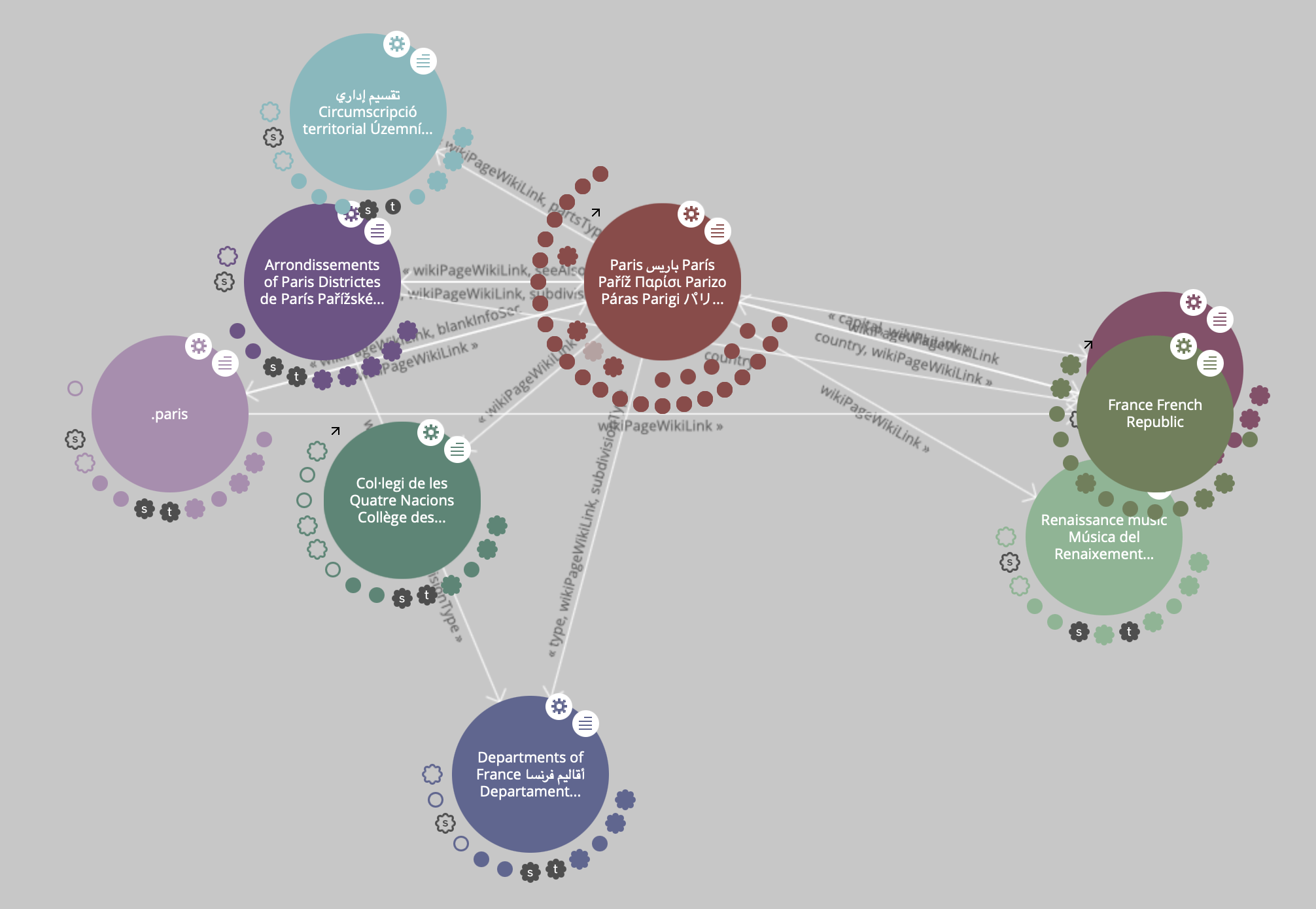
The Semantic Web primer - representing semantically structured knowledge on the World Wide Web
Through the academy Ramani attempts to educate developers on the Semantic Web. In order to make use of Linked Data it is important to understand the graph structure of the data and understand how this data is created. However, in order to consume the data and use it to more easily create applications basic knowledge should be sufficient. Therefore this course aims to be practice intensive rather than focusing on the theory. The aim is:
- Make developers understand the added value of Web Semantics and Linked Data above traditional data models.
- Provide a way of learning that is focused on useful examples for developers first and adding the necessary theory to recreate this after.
What you will learn:
- Understanding the graph based structure of data on the Semantic Web
- Understanding the data models that support Web Semantics
- How to query data on the Semantic Web
- How to consume data on the Semantic Web in a way that makes creating your application easier
- How to create Linked Data or data models yourself in order to contribute to the Semantic Web
Course Topics:
- Ontologies
- This course will teach you why ontologies are needed on the Semantic Web, how they contribute to sharing knowledge, and how to build them yourselves
- SPARQL
- This course will help you understand the basics of querying data on the Semantic Web, introducing the query language SPARQL and tools to help you in creating your own queries